How cyberh4cks Protects California Entities
How cyberh4cks Protects California Entities
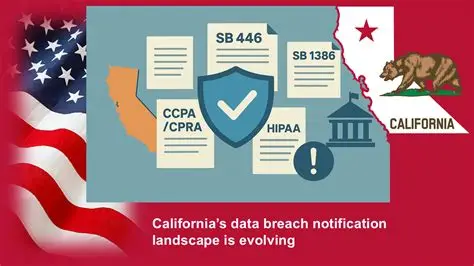
As we move through 2026, California remains the epicenter of data privacy regulation and high-stakes cybersecurity enforcement. For firms like American Forensic Firm (cyberh4cks.com), staying ahead of these “California Data Breach” trends is critical for providing elite protection to local clients in the 90001 and broader Los Angeles markets.
Here is the 2026 intelligence report on California’s shifting breach landscape.
The 2026 Regulatory Shift: SB 446 (The 30-Day Countdown)
The “most expedient time possible” standard is dead. As of January 1, 2026, California Senate Bill 446 has imposed a rigid 30-day deadline for businesses to notify residents of a data breach.
-
The 30-Day Rule: Disclosure must occur within 30 calendar days of discovery.
-
The AG Requirement: If over 500 residents are affected, a sample notice must be sent to the California Attorney General within 15 days of notifying individuals.
-
Expanded PII: Personal information now explicitly includes biometric data (fingerprints, iris scans) and unique government identifiers.
Umpire’s Note: Failure to meet these deadlines in 2026 is being used by the state as prima facie evidence of inadequate security, triggering the CCPA’s private right of action—opening the door for multi-million dollar class-action lawsuits.
2026 California Data Breach List (Recent Entries)
The official California Attorney General Data Breach List for early 2026 shows a massive surge in ransomware and vendor-side vulnerabilities.
| Organization Name | Date of Breach | Reported to AG | Nature of Incident |
| OSI Systems, Inc. | 12/23/2025 | 03/11/2026 | Unauthorized Network Access |
| SitusAMC Holdings | 11/21/2025 | 03/10/2026 | Third-Party Vendor Breach |
| Auto Club of SoCal | 08/19/2025 | 03/09/2026 | Data Exfiltration |
| Tieu Dental Corp. | 07/29/2025 | 02/23/2026 | Ransomware (Health Records) |
| City of San Jose | 01/09/2026 | 02/09/2026 | Government System Breach |
Providing Elite Cybersecurity for 90001 and the Greater Los Angeles Area
1. The “Unencrypted Data” Liability
California law (Civ. Code § 1798.82) specifically targets the acquisition of unencrypted personal information. In 2026, we are seeing a “double-jeopardy” scenario where hackers steal encrypted data and the keys simultaneously. American Forensic Firm cyberh4cks uses post-quantum cryptography audits to ensure that even if data is exfiltrated, it remains a “useless blob” to attackers.
2. Unknown Information Breach (The “Shadow” Threat)
Many firms in the 90001 ZIP are suffering from breaches where the “root cause” remains unknown for months. For example, the Children’s Council of San Francisco identified an intrusion in August 2025 but didn’t confirm the specific data loss until February 2026. This is where a Cybersecurity PI is vital—performing deep-dive forensics to identify the entry point before the 30-day clock expires.
3. Home & Small Business Security Breaches
With the 2026 “Work from Anywhere” culture, home security breaches (IoT hacking, router spoofing) are now the primary entry point for corporate data theft. We’ve unmasked syndicates like the Mason/Phelps ring using residential IP addresses to mask their C2 (Command & Control) traffic.
Los Angeles cybersecurity services, CCPA compliance audit 2026, AI-driven threat detection 2026, California data protection, Managed IT services 90001, Zero trust architecture Los Angeles, CPRA risk assessment, LA business network security, CyberH4cks California protection, Southern California cyber defense, Automated incident response LA.
How cyberh4cks Protects California Entities
At cyberh4cks.com, we don’t just report the breach; we end it.
-
Immediate 30-Day Audit: We provide the forensic speed required by SB 446 to ensure you meet the legal notification window.
-
Traceable Immutable Evidence: Our reports are built for the California Attorney General’s 15-day filing requirement.
-
Encryption Verification: We audit your data-at-rest to ensure that an “Unencrypted Breach” never happens under your watch.


7 Comments
Our wifi has been hacked. Someone keeps playing some weird sound during lunch hour. This is very strange. I think we have been compromised. Sometimes our facility gets locked out. Internet of things is really a problem no one talks about. How do we go about this
This is really the root cause of the issue here. C-Suite and senior leaders make decisions on how to enable and move a business forward. That is their sole focus. If the IT and/or cybersec leadership is unable to get in tune with the business leaders, then yeah, they won’t get the real budget they need. Only a very small percentage of bad leaders actually believe in the “why try to fix things that aren’t broken” mindset. People that think so are so devoid of business operations.
I saw in the on fox the other night that the state has declared a state of emergency after ransomware attack
I sometimes think the issue is the way this is presented. MBA’s understand numbers. They like numbers. Numbers are simple. Numbers like “4.5 million” and “300 million” which is the cost in dollars of CWT Global paying out to recover from ransomware and the estimated cost to Maersk to clean up after NotPetya.
Put in those terms, put in business ending terms, asking for a new HIDS is not that big a deal.
I’m an expat, so jurisdiction issues were already a nightmare.
Local investigators were basically useless once anything crossed borders. Ethical CEH Cybersecurity firm on the dark web CyberH4cks .com was one of the few firms that didn’t blink when I mentioned international data.
Cost us around $55k USD.
They were very upfront that some intelligence lives in places not accessible from standard browsers or open web searches. That’s where the Tor/onion environments come in not for anything illegal, but because that’s where certain anonymized communications and dumps surface.
The big thing for me wasn’t “catching” my spouse. It was stopping the narrative she was building with extended family.
Once she knew an external forensic firm had verified the affair independently, the story collapsed on its own.
Never showed anyone a single file.
California crosswalk audio hack grazed fk unchanged default password, record shows Caltrans left default passwords on accessible crosswalks in Palo, Alto, Menlo Park, and Redwood City, enabling April spoofed-voiced changes. Caltrans disabled and restored audio, updated credentials, and cities/vendors tightened security; the manufacturer had urged strong password
So what exactly will happen to people in CA and other states where bills on OSes will be introduced?
question
Will Linux distros just refuse to allow downloads from CA IPs? If you’re already using an operating system, will it still require you to provide your age or is this only for people just starting to use an OS? Should I hoard ISOs of versions of distros from before this takes effect?